

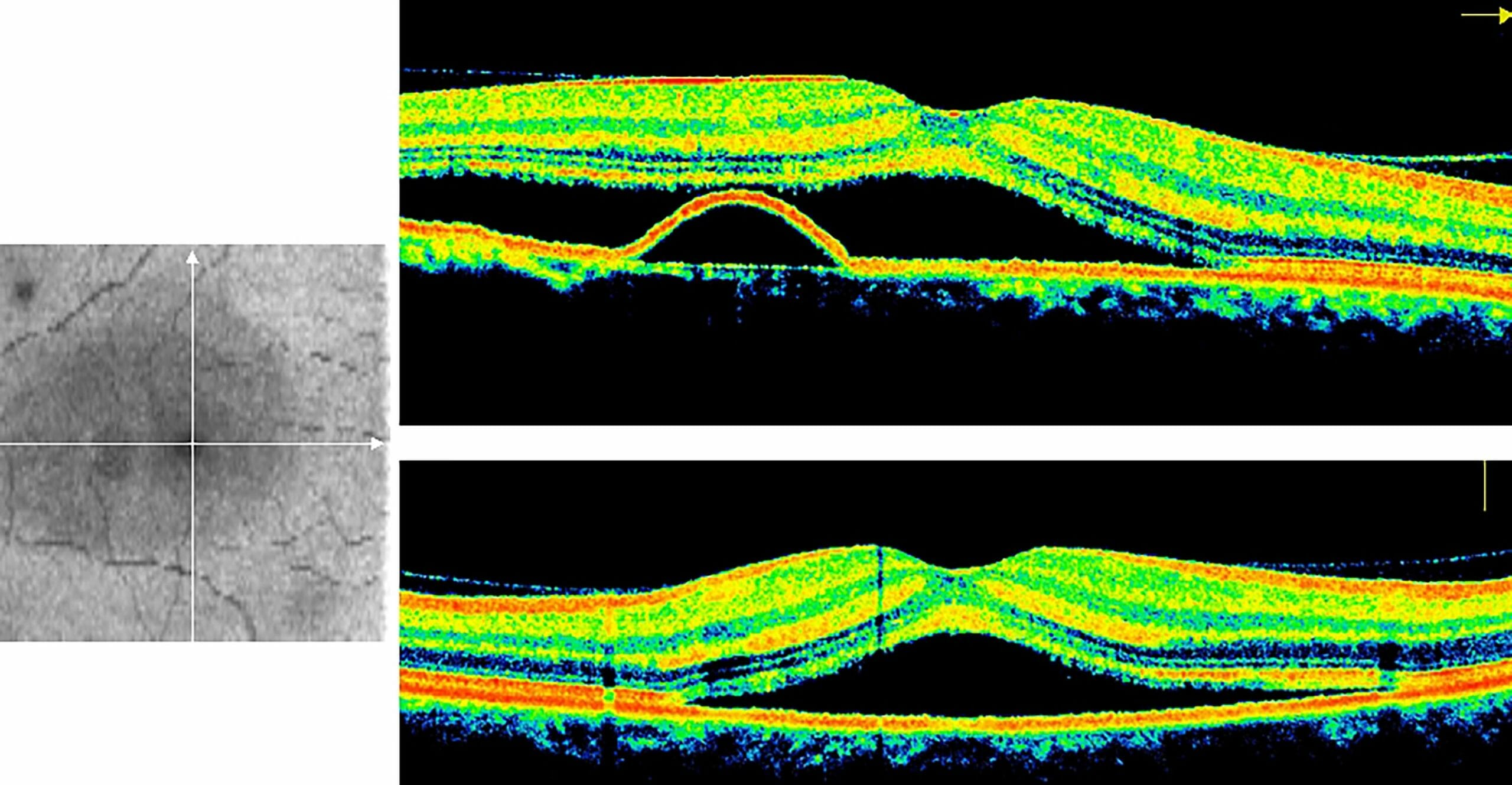
Central serous chorioretinopathy (CSCR) is an eye condition that causes fluid buildup under the retina, leading to blurred vision and distorted images. It primarily affects middle-aged men but can occur in women and younger individuals as well. The condition is often linked to stress, corticosteroid use, and other risk factors.
Many patients wonder whether CSCR is reversible and what the long-term prognosis looks like. While some cases resolve on their own, others require central serous chorioretinopathy treatment to manage symptoms and prevent recurrence.
What Causes Central Serous Chorioretinopathy?
Understanding the Condition
CSCR occurs when fluid leaks from the choroid, the vascular layer beneath the retina, and accumulates under the retinal pigment epithelium (RPE). This leads to a detachment of the retina, affecting vision. The exact cause is not fully understood, but it is believed to be related to increased permeability of the choroidal blood vessels.
Common Risk Factors
- Stress and Cortisol Levels: High stress levels and increased cortisol production can contribute to the development of CSCR.
- Corticosteroid Use: Both oral and topical steroid medications have been linked to the condition.
- Hypertension: High blood pressure may increase the risk of fluid leakage in the retina.
- Sleep Disorders: Conditions like sleep apnea are associated with a higher prevalence of CSCR.
Is CSCR Reversible?
Spontaneous Resolution
In many cases, CSCR resolves on its own without the need for medical intervention. The fluid under the retina often reabsorbs within three to six months, and vision gradually improves. However, some individuals experience lingering symptoms, and recurrences are common.
Chronic CSCR and Long-Term Effects
While acute CSCR can resolve naturally, chronic cases may lead to permanent damage to the retina. Prolonged fluid accumulation can cause atrophy of the RPE, leading to lasting visual impairment. This is why early diagnosis and appropriate central serous chorioretinopathy treatment are crucial for preventing long-term complications.
Treatment Options for CSCR
1. Observation and Lifestyle Changes
For mild cases, doctors often recommend a wait-and-see approach. Patients are advised to reduce stress, avoid steroid medications, and maintain a healthy lifestyle to promote natural healing.
2. Photodynamic Therapy (PDT)
PDT is a widely used treatment for persistent or recurrent CSCR. It involves the use of a light-activated drug, verteporfin, which is injected into the bloodstream and activated with a laser to reduce abnormal choroidal blood vessel permeability. This treatment helps prevent further fluid leakage and promotes retinal reattachment.
3. Laser Therapy
Focal laser treatment is sometimes used to target specific leaking areas in the retina. This method is most effective when the leakage point is located away from the central vision area.
4. Oral Medications
Some medications, such as mineralocorticoid receptor antagonists (e.g., eplerenone and spironolactone), have been used off-label to treat CSCR. These drugs help reduce choroidal fluid leakage by stabilizing blood vessel function.
5. Anti-VEGF Injections
In certain cases, anti-vascular endothelial growth factor (anti-VEGF) injections may be used to control fluid accumulation and prevent further retinal damage.
Long-Term Outlook for CSCR Patients
Recurrence and Risk Management
Even after successful treatment, CSCR can recur, especially if the underlying risk factors are not addressed. Patients who experience multiple episodes may develop chronic CSCR, leading to progressive visual decline.
Monitoring and Regular Eye Exams
Regular follow-up appointments with an ophthalmologist are essential to monitor retinal health and detect any signs of recurrence. Optical coherence tomography (OCT) scans are commonly used to assess fluid levels in the retina.
Conclusion
CSCR is often reversible in its acute form, with many cases resolving naturally within a few months. However, chronic cases can lead to long-term vision impairment if not managed properly. Various central serous chorioretinopathy treatment options, including photodynamic therapy, laser therapy, and oral medications, are available for persistent cases. Patients should work closely with their eye doctor to develop a personalized treatment plan and take proactive steps to reduce the risk of recurrence.
